Surface finishing is not a labor-intensive procedure anymore, but a precision-driven one. In today’s manufacturing landscape coating quality is directly affecting durability, corrosion resistance as well as overall perception of the product. To keep up with the demands of clients who are looking for flawless finishes, and improving global standards, numerous companies have opted to use paint robots.
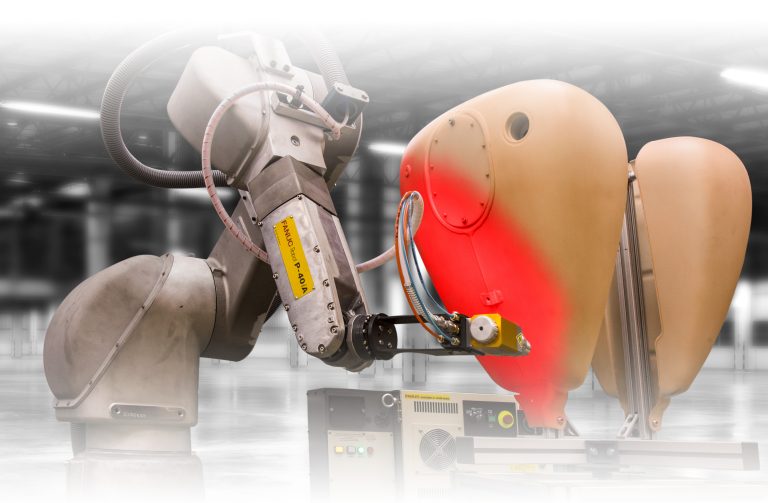
Image credit: automatedsolutions.com.au
A modern paint robot brings structured motion and programmable accuracy to applications that once depended on operator technique. Manufacturers reduce inconsistencies such unbalanced film production or excess use of materials by automating the spray path, speed, and application angles. This produces coating processes that are consistent and supports First Time Quality.
Consistency with the same principles, efficiency, and quantifiable gains
The human factor or slight variations in the technique could result in variations in the thickness and coverage of the manual paint. Paint robots eliminate that variation as they repeat the exact motion pattern over and over again throughout the production stage. This type of repetition guarantees an uniform surface finish and the best distribution of materials on each part.
Advanced paint systems that use robotics improve the efficiency of transfer. By ensuring a precise distance and direction between the applicator and component, the amount of overspray is decreased and more coating material reaches the target surface. The less waste material directly affects the cost of production, and a reduction in volatile organic compound emissions support green initiatives.
Paint robotics that integrates fluid handling ensures the precise mixing ratios of coatings with multiple components. This eliminates any inconsistentities that could compromise the integrity of the finished. A flexible flow control, coupled with programmable parameter settings allows manufacturers to modify the atomisation or spray pattern without affecting production.
Safety and Productivity
The adoption of a robot painter can bring an enormous benefit in terms of increased uptime. Paint cells that are robotic work all the time and with minimal interruption in contrast to manual processes. Once programmed, they maintain constant throughput, without the need for breaks or constant supervision.
Security considerations are essential for facilities handling solvent-based coatings, or two-component paints. The atomisation of paint can lead to dangerous atmospheres, especially when working with flammable or reactive materials. Modern paint robots can operate safely in challenging conditions. This reduces the risk of exposure to chemicals that are harmful and increases workplace safety.
The conveyor tracking technology increases productivity further through the robotic painting of components while they are in motion. This technology expands the working area and helps keep production lines running efficiently.
Australian Automation Expertise Supporting Industry
For manufacturers seeking to modernise their finishing operations having access to a skilled automation partners is necessary. Automated Solutions in Australia has a solid reputation for providing advanced robotic integration services. As FANUC certified robotic integrators with a wealth of experience in automation engineering the team helps businesses implement customized robotic paint solutions that are aligned with their objectives for operations.
Automated Solutions helps manufacturers evaluate their processes and develop robotic paint cells, combining technological expertise and industry knowledge. Facilities can get a better understanding of the performance improvement process through co-operative planning, simulation and system integration.
Paint robotics is more than just an automation. It is about improving quality, safety and efficiency. A well-engineered system for painting transforms finishing on surfaces into a precise consistent, cost-effective, and repeatable process. Manufacturers can enhance their competitiveness by working with experts in automation who have the expertise to help them to succeed over time in an industry that is becoming more demanding.